Wednesday, January 14, 2009

Need More Bullets


January 14, 2009
Stimulus Alone Won’t End Crisis, Bernanke Says

LONDON — The chairman of the Federal Reserve, Ben S. Bernanke, warned Tuesday that the highly unpopular job of using taxpayer money to bail out financial institutions in the United States and other countries was far from over.

One day after President Bush, at the request of President-elect Barack Obama, asked Congress to free up the second half of the money for the Treasury Department’s $700 billion financial rescue program, Mr. Bernanke cautioned that banks and other lending institutions were still not functioning properly and would probably need additional money.

More capital injections and guarantees may become necessary to ensure stability and the normalization of credit markets,” Mr. Bernanke said during a speech at the London School of Economics.

Though the Fed chairman acknowledged that people in many countries were “understandably concerned” about pumping government money into the financial industry while often turning a cold shoulder to other sectors, he defended the effort as unpleasant but necessary.

“This disparate treatment, unappealing as it is, appears unavoidable,” he said. “Our economic system is critically dependent on the free flow of credit, and the consequences for the broader economy of financial instability are thus powerful and quickly felt.”

Indeed, Mr. Bernanke suggested that Mr. Obama might want to revive the original idea of the rescue plan to buy unsellable mortgage-backed securities and other illiquid assets. That idea was originally the centerpiece of the program as it was first promoted by the current Treasury secretary, Henry M. Paulson Jr. Mr. Paulson abandoned the idea before getting started, arguing that it would be faster and more efficient to inject capital directly into the biggest banks and investment firms.

In a separate appearance on Tuesday in Washington, the Fed’s vice chairman, Donald L. Kohn, said that financial institutions were still “clogged” by hard-to-sell assets and still needed help.

Mr. Bernanke supported the efforts by Congress and President-elect Obama to put together a fiscal stimulus program worth roughly $800 billion over two years that would be weighted heavily toward big new spending on infrastructure projects, like bridges and schools, “green” energy projects, and expanded safety-net programs like unemployment benefits.


(Full story at nytimes.com)
=================================

Tuesday, January 13, 2009

Last Shoe Dropping?

January 12, 2009

Adding to Recession’s Pain, Thousands to Lose Jobless Benefits

Just as the recession is throwing people out of work at an alarming rate, the unemployment insurance system in New York and many other states will start cutting off benefits this week for thousands of people who have been unable to find jobs since early last year.

About 50,000 New Yorkers who had been collecting unemployment checks for 11 months — the longest stretch that benefits have been available since the last recession eight years ago — will stop receiving weekly payments this week, according to the State Labor Department.

In normal circumstances, people laid off from full-time jobs can collect benefits for up to 26 weeks, after which they fall off the rolls. But some of the people who will lose benefits this week have been on unemployment for 46 weeks because Congress approved extensions of jobless benefits twice last year.

This will be the first time since the early 1990s that workers are exhausting benefits that have been extended twice because of an economic downturn. The inability of those people to find work after so many months provides a stark reminder of the weakness of the job market, officials and experts say.

For many of those facing the loss of that lifeline, the next step may be welfare, experts say.

Julio Ponce, a 55-year-old chef, has been using his weekly $352 unemployment check to pay the rent on his apartment in the Bushwick section of Brooklyn since he lost his job at a center for the elderly more than a year ago. But he said he did not know how he would cover the $800 monthly rent after his unemployment benefits lapsed this week.

“No one is helping me,” said Mr. Ponce, who was faxing his résumé to hotels and restaurants from an employment office in Downtown Brooklyn on Thursday. “I’ve applied for public assistance, but I don’t think I’m going to get it.”

Extended benefits are also about to expire over the next week or two in Massachusetts, Texas, Virginia, Pennsylvania and at least 20 other states, according to the National Employment Law Project, a nonprofit organization that advocates for lower-wage workers. No official estimates exist for how many people would lose their benefits in those states, but experts said it was likely to exceed 200,000.

In Philadelphia, Tony Green, 38, said he was due to collect the last of his checks by Jan. 25. His twice-extended benefits have amounted to $470 a month after taxes, forcing him to give up a rented house in the Fox Chase section of the city and move with his two teenage children to a place in North Philadelphia that he described as “drug-infested and dirty.”

Mr. Green said he had sold his car and borrowed more than $10,000, mostly on “maxed-out” credit cards. He has been taking construction jobs to supplement his benefits, but said he feared the extra income would dry up as the economy contracted.

“People are really tapped out,” he said.

Unemployment insurance, a federal system that is administered by the states, was intended as a stopgap, half-year source of relief, not a long-term source of income. But last year, as the economy slumped and the unemployment rate rose, Congress approved two extensions of jobless benefits, one for 13 weeks and the second for up to 20 additional weeks. The national unemployment rate rose again in December to 7.2 percent, a 16-year high, the government reported Friday.

However,...

(full story at nytimes.com)
============================

Wednesday, January 7, 2009

You're The Man


Mohd Abdul Wahid, Wan Ahmad Farid, Azharuddin

===================================

Thank You America

-
Thank y'all for lettin us rape you! Y'all were great! We really appreciate it.


Y'all keep 'em commin, we'll keep dishin out crap. Tengkiu! Tengkiu! Tengkiu!


-


Replies from Chrysler's Victims

-
Here are some.

(Source Chrysler Blog)


-
Comments

Hey Crysler! You're not welcome. You took my hard earned tax dollars without congressional approval. This is not the time for a "thank you." This would be a good time for a refund...and an apology. http://rightklik.net
Posted Dec 27, 2008, 3:19 PM by RightKlik.net

---------------
Mr. Nardelli,It takes a man with a whole lotta chutzpah to thank a person for investing in a company when they had zero voice in the matter.My elected representatives decided 'no'. The executive branch decided 'yes' through means that might be legal but frankly smell like rotten fish.You may certainly get my money this way, but you will never see a dime of my money voluntarily spent on any of your products.Brian DunbarNeenah, Wisconsin
Posted Dec 27, 2008, 3:20 PM by bdunbar

-------------------------------
Mr Nardelli, Fire your PR and advertising teams and execs immediately. We the People did not want to see any more ads and money wasted on ads, be it from Chrysler, et al, or from your own pocket. You should have put up a website thanking the people and just submitted it to various online news aggregators for free. Once again, I am pained to see you are demonstrating a lack of common sense and fiscal responsibility. We supported the bailout of the car companies, even in the face of the horrendously mismanaged and secretive bailout of banks, and you stlil throw money away in the name of your company. Time to wake up. Sincerely, Matt and the rest of the Internet.
Posted Dec 27, 2008, 3:20 PM by dezmd

-------------------------
I have to say this ad disappointed me. First of all, do you need to spend your precious dollars on expenisve newspaper space? Second of all, it's hard to say "America" is really responsible for granting the bridge loans. One survey said that 61% of Americans were against it. Congress was working against the will of the voters. Let me go through each of the three points: "Providing cars and trucks you want to buy, enjoy driving, and will want to buy again." Well, I wanted to buy a Stratus in 2004. I bought it and enjoy driving it. However, I would not buy a Chrysler again beacuse the new products are lower quality and less visually appealing than their predecessors. "Delivering products with the best quality and value in our Company's history." Based on what I've seen and heard, Chrysler vehicle quality is lower than it was a few years ago. "Improving fuel economy to support Americas energy security and environmental sustainability." Chrysler's current full-size and compact vehicles are LESS fuel efficient than they were in 2003. Chrysler built the cars of my dreams in the 1990s but the latest models are a real let down. Chrysler does not deserve aid until it can present compelling new-generation vehicles. Putting battery packs in the current models dosen't count.
Posted Dec 27, 2008, 3:20 PM by Mwhite

--------------------------
Your resignation and the resignations of senior executives who have mismanaged the business would have been much more appropriate.
Posted Dec 29, 2008, 8:03 PM by California Initiative

----------------------------
Dear Mr. Nardelli and the "over one million people who depend on Chrysler" - You've got some nerve to thank us for our forced "investment" when we didn't want it to happen in the first place. Isn't forced or coerced investment akin to robbery? Taking one's money against one's will? Hmmm . . . . The very thought that MY money is going to go to some union lackey's pockets just makes me queasy. You should've filed for bankruptcy just like any other business in your position would have to. And that would've given you the opportunity to unshackle yourselves from the ridiculous union contracts that you signed on to. You've got two major issues to fix: Unions and quality products. If you'd listen to your customers and NOT the media and marketing types, you'd fix your product issues. And the unions . . . sheesh, get out of that racket! Notice the plants in the South where unions aren't that prominent don't have the same issues as the ones up North? Let's see what happens when MY business tanks. Will YOU throw cash at me? I don't think so. So, in conclusion - to hell with you and your company. Any business that would go begging to the government for a handout has no shame, and deserves to fail. File for Bankruptcy, or crumble!
Posted Dec 29, 2008, 8:03 PM by Richard S.

-----------------------------------
Mr. Home Depot has now shown that he can take extravagance to another extreme high. Why in the world are you thanking people that didn't want this. You need to spend the money you spent on this ad to bailout one of your line workers whose house is about to go into default. Pay it forward Nardelli we don't need to your hypocrisy!
Posted Dec 29, 2008, 8:03 PM by loco4obx

----------------------------
I'm speechless. And I'm saddened that a corporate management team is so inept at understanding public opinion. Some advice: issue a press release stating that you regret that you made a mistake using taxpayers' money in this manner.
Posted Dec 29, 2008, 8:03 PM by beachwriter

------------------------------
Bob Nardelli - thanking Americans for stealing their money is NOT something to boast about on your website. The American public DID speak when we choose to NOT buy your cars. Why not spend the money by showing us something compelling that people would "want" to buy. I have NEVER hear anyone excited about "buying a chrysler." You have no brand strength and this current "Thank You" ad will further your branding problems.
Posted Dec 30, 2008, 11:44 AM by Alvin P. Sams

-------------------------------
My response to being forced to bail Chrysler out was to immediately purchase a FORD Focus and I will NEVER buy any car that Chrysler has anything to do with. This ad you ran "thanking" us was an example of you wasting OUR money.
Posted Dec 30, 2008, 11:44 AM by redwood tree

-------------------------------
Dear Chrysler, I'd like to thank you. You have now completely converted me to a 100% foreign car owner from this point forward. I was, emphasis on was, a proud owner of a 2006 Dodge Ram Quad-Cab 4X4 with a Hemi. As you are well aware it is among the more expensive models of vehicles you sell. After seeing the parent comapny of Dodge falter and beg for money from the US Tax payers, I am no longer proud to own this vehicle. In fact, I will finish paying off my loan and proceed to my nearest Mini Dealership or Nissan Dealership and buy my next car there when it comes time. Why? Not because I don't like the truck. I do not approve of the money that was given to you by our President. I do not approve of the slap in the face I felt when I read your ad. Why did you need to take a bail out? Poor management. This ad just goes to show that you and your company has not learned anything, and like the rest of the US I am upset. This opportunity was squandered, by you and your incompetance. For the sake of my tax dollars I hope you succeed with a restructure like the late 70s early 80s when you received your first bail-out. However, with the poor decisions of this ad I forsee a bad investment on the horizon by the US Government.
Posted Dec 30, 2008, 11:44 AM by Jasen Hicks

-----------------------
Obviously nothing has changed. Chrysler is still making stupid decisions by wasting its stolen taxpayer money on useless ads. I will never, ever even consider buying a Chrysler. Chrysler makes nothing but JUNK, and has rightfully earned its poor reputation. Mr. Nardelli, do yourself and Chrysler a favor and resign.
Posted Dec 30, 2008, 11:44 AM by BuyJapanese

------------------------------
Thank You? Kiss mine you looters. I had ZERO choice in the matter. The money was taken from me by FORCE of GOVERNMENT and given to you. Ads like this reaffirm my decesion to buy a Honda last year. Bottom line Chrysler- I WILL NEVER BUY FROM A COMPANY THAT POINTS A GUN TO MY HEAD AND THEN SAYS THANKS. This ad infuraties me. Rot in hell scumbags.
Posted Dec 30, 2008, 8:03 PM by Lede Agenda


(Read more comments from Chrysler Blog)

Friday, January 2, 2009

God Fearing People?


January 2, 2009
For Afghans, a Price for Everything, and Anything for a Price
By DEXTER FILKINS


KABUL — When it comes to governing this violent, fractious land, everything, it seems, has its price.

Want to be a provincial police chief? It will cost you $100,000.

Want to drive a convoy of trucks loaded with fuel across the country? Be prepared to pay $6,000 per truck, so the police will not tip off the Taliban.

Need to settle a lawsuit over the ownership of your house? About $25,000, depending on the judge.

“It is very shameful, but probably I will pay the bribe,” Mohammed Naim, a young English teacher, said as he stood in front of the Secondary Courthouse in Kabul. His brother had been arrested a week before, and the police were demanding $4,000 for his release. “Everything is possible in this country now. Everything.”

Kept afloat by billions of dollars in American and other foreign aid, the government of Afghanistan is shot through with corruption and graft. From the lowliest traffic cop to the family of President Hamid Karzai himself, the state built on the ruins of the Taliban regime seven years ago now often seems to exist for little more than the enrichment of those who run it.

A raft of investigations has concluded that people at the highest levels of the Karzai administration, including President Karzai’s own brother, Ahmed Wali Karzai, are cooperating in the country’s opium trade, now the world’s largest. In the streets and government offices, hardly a public transaction seems to unfold here that does not carry with it the requirement of a bribe, a gift, or, in case you are a beggar, “harchee” — whatever you have in your pocket.

The corruption, publicly acknowledged by President Karzai, is contributing to the collapse of public confidence in his government and to the dramatic resurgence of the Taliban, whose fighters have moved to the outskirts of the capital.

“All the politicians in this country have acquired everything — money, lots of money,” President Karzai said in a speech at a rural development conference here last month. “God knows, it is beyond the limit. The banks of the world are full of the money of our statesmen.”

The decay of the Afghan government presents President-elect...

(Full story at nytimes.com)

===================================

Thursday, January 1, 2009

Twenty O' Nine !

-


Happy New Year!!!

=======================================

Tuesday, December 30, 2008

Sarong Party?

-


(news from thestar online. Picture from Wikipedia)

Saturday, December 27, 2008

America Hooked on Drugs

-

December 26, 2008

Chinese Savings Helped Inflate American Bubble
By MARK LANDLER


“Usually it’s the rich country lending to the poor. This time, it’s the poor country lending to the rich.”

— Niall Ferguson


WASHINGTON — In March 2005, a low-key Princeton economist who had become a Federal Reserve governor coined a novel theory to explain the growing tendency of Americans to borrow from foreigners, particularly the Chinese, to finance their heavy spending.

The problem, he said, was not that Americans spend too much, but that foreigners save too much. The Chinese have piled up so much excess savings that they lend money to the United States at low rates, underwriting American consumption.

This colossal credit cycle could not last forever, he said. But in a global economy, the transfer of Chinese money to America was a market phenomenon that would take years, even a decade, to work itself out. For now, he said, “we probably have little choice except to be patient.”

Today, the dependence of the United States on Chinese money looks less benign. And the economist who proposed the theory, Ben S. Bernanke, is dealing with the consequences, having been promoted to chairman of the Fed in 2006, as these cross-border money flows were reaching stratospheric levels.

In the past decade, China has invested upward of $1 trillion, mostly earnings from manufacturing exports, into American government bonds and government-backed mortgage debt. That has lowered interest rates and helped fuel a historic consumption binge and housing bubble in the United States.

China, some economists say, lulled American consumers, and their leaders, into complacency about their spendthrift ways.

“This was a blinking red light,” said Kenneth S. Rogoff, a professor of economics at Harvard and a former chief economist at the International Monetary Fund. “We should have reacted to it.”

In hindsight, many economists say, the United States should have recognized that borrowing from abroad for consumption and deficit spending at home was not a formula for economic success. Even as that weakness is becoming more widely recognized, however, the United States is likely to be more addicted than ever to foreign creditors to finance record government spending to revive the broken economy.

To be sure, there were few ready remedies. Some critics argue that the United States could have pushed Beijing harder to abandon its policy of keeping the value of its currency weak — a policy that made its exports less expensive and helped turn it into the world’s leading manufacturing power. If China had allowed its currency to float according to market demand in the past decade, its export growth probably would have moderated. And it would not have acquired the same vast hoard of dollars to invest abroad.

Others say the Federal Reserve and the Treasury Department should have seen the Chinese lending for what it was: a giant stimulus to the American economy, not unlike interest rate cuts by the Fed. These critics say the Fed under Alan Greenspan contributed to the creation of the housing bubble by leaving interest rates too low for too long, even as Chinese investment further stoked an easy-money economy. The Fed should have cut interest rates less in the middle of this decade, they say, and started raising them sooner, to help reduce speculation in real estate.

Today, with the wreckage around him, Mr. Bernanke said he regretted that more was not done to regulate financial institutions and mortgage providers, which might have prevented the flood of investment, including that from China, from being so badly used. But the Fed’s role in regulation is limited to banks. And stricter regulation by itself would not have been enough, he insisted.

“Achieving a better balance of international capital flows early on could have significantly reduced the risks to the financial system,” Mr. Bernanke said in an interview in his office overlooking the Washington Mall.

“However,” he continued, “this could only have been done through international cooperation, not by the United States alone. The problem was recognized, but sufficient international cooperation was not forthcoming.”

The inaction was because of a range of factors, political and economic. By the yardsticks that appeared to matter most — prosperity and growth — the relationship between China and the United States also seemed to be paying off for both countries. Neither had a strong incentive to break an addiction: China to strong export growth and financial stability; the United States to cheap imports and low-cost foreign loans.

In Washington, China was treated as a threat by some people, but mostly because it lured away manufacturing jobs. Others argued that China’s heavy lending to this country was risky because Chinese leaders could decide to withdraw money at a moment’s notice, creating a panicky run on the dollar.

Mr. Bernanke viewed such international investment flows through a different lens. He argued that Chinese invested savings abroad because consumers in China did not have enough confidence to spend. Changing that situation would take years, and did not amount to a pressing problem for the Americans.

“The global savings glut story did us a collective disservice,” said Edwin M. Truman, a former Fed and Treasury official. “It created the idea that the world was doing it to us and we couldn’t do anything about it.”

But Mr. Bernanke’s theory fit the prevailing hands-off, pro-market ideology of recent years. Mr. Greenspan and the Bush administration treated the record American trade deficit and heavy foreign borrowing as an abstract threat, not an urgent problem.

Mr. Bernanke, after he took charge of the Fed, warned that the imbalances between the countries were growing more serious. By then, however, it was too late to do much about them. And the White House still regarded imbalances as an arcane subject best left to economists.

By itself, money from China is not a bad thing. As American officials like to note, it speaks to the attractiveness of the United States as a destination for foreign investment. In the 19th century, the United States built its railroads with capital borrowed from the British.

In the past decade, China arguably enabled an American boom. Low-cost Chinese goods helped keep a lid on inflation, while the flood of Chinese investment helped the government finance mortgages and a public debt of close to $11 trillion.

But Americans did not use the lower-cost money afforded by Chinese investment to build a 21st-century equivalent of the railroads. Instead, the government engaged in a costly war in Iraq, and consumers used loose credit to buy sport utility vehicles and larger homes. Banks and investors, eagerly seeking higher interest rates in this easy-money environment, created risky new securities like collateralized debt obligations.

“Nobody wanted to get off this drug,” said Senator Lindsey Graham, the South Carolina Republican who pushed legislation to punish China by imposing stiff tariffs. “Their drug was an endless line of customers for made-in-China products. Our drug was the Chinese products and cash.”

Mr. Graham said he understood the addiction: he was speaking by phone from a Wal-Mart store in Anderson, S.C., where he was Christmas shopping in aisles lined with items from China.

A New Economic Dance

The United States has been here before. In the 1980s, it ran heavy trade deficits with Japan, which...


...

An Embrace That Won’t Let Go

For China, too, this crisis has been a time of reckoning. Americans are buying fewer Chinese DVD players and microwave ovens. Trade is collapsing, and thousands of workers are losing their jobs. Chinese leaders are terrified of social unrest.

Having allowed the renminbi to rise a little after 2005, the Chinese government is now under intense pressure domestically to reverse course and depreciate it. China’s fortunes remain tethered to those of the United States. And the reverse is equally true.

In a glassed-in room in a nondescript office building in Washington, the Treasury conducts nearly daily auctions of billions of dollars’ worth of government bonds. An old Army helmet sits on a shelf: as a lark, Treasury officials have been known to strap it on while they monitor incoming bids.

For the past five years, China has been one of the most prolific bidders. It holds $652 billion in Treasury debt, up from $459 billion a year ago. Add in its Fannie Mae bonds and other holdings, and analysts figure China owns $1 of every $10 of America’s public debt.

The Treasury is conducting more auctions than ever to finance its $700 billion bailout of the banks. Still more will be needed to pay for the incoming Obama administration’s stimulus package. The United States, economists say, will depend on the Chinese to keep buying that debt, perpetuating the American habit.

Even so, Mr. Paulson said he viewed the debate over global imbalances as hopelessly academic. He expressed doubt that Mr. Bernanke or anyone else could have solved the problem as it was germinating.

“One lesson that I have clearly learned,” said Mr. Paulson, sitting beneath his Chinese watercolor. “You don’t get dramatic change, or reform, or action unless there is a crisis.”


(complete story at nytimes.com)

==================================================

Sunday, December 21, 2008

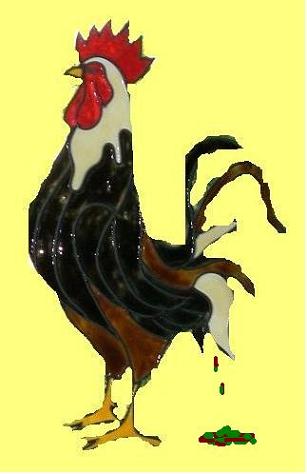
One Cock Color

-
IS there any difference between Madoff's 50 Billion Dollar Ponzi scheme and the Trillion Dollar Wall Steet Robbery ? This Nobel Laureate thinks they are pretty much "One Cock Color"!

----------------------------------------------------

December 19, 2008
Op-Ed Columnist

The Madoff Economy
By PAUL KRUGMAN
The revelation that Bernard Madoff — brilliant investor (or so almost everyone thought), philanthropist, pillar of the community — was a phony has shocked the world, and understandably so. The scale of his alleged $50 billion Ponzi scheme is hard to comprehend.

Yet surely I’m not the only person to ask the obvious question: How different, really, is Mr. Madoff’s tale from the story of the investment industry as a whole?

The financial services industry has claimed an ever-growing share of the nation’s income over the past generation, making the people who run the industry incredibly rich. Yet, at this point, it looks as if much of the industry has been destroying value, not creating it. And it’s not just a matter of money: the vast riches achieved by those who managed other people’s money have had a corrupting effect on our society as a whole.

Let’s start with those paychecks. Last year, the average salary of employees in “securities, commodity contracts, and investments” was more than four times the average salary in the rest of the economy. Earning a million dollars was nothing special, and even incomes of $20 million or more were fairly common. The incomes of the richest Americans have exploded over the past generation, even as wages of ordinary workers have stagnated; high pay on Wall Street was a major cause of that divergence.

But surely those financial superstars must have been earning their millions, right? No, not necessarily. The pay system on Wall Street lavishly rewards the appearance of profit, even if that appearance later turns out to have been an illusion.

Consider the hypothetical example of a money manager who leverages up his clients’ money with lots of debt, then invests the bulked-up total in high-yielding but risky assets, such as dubious mortgage-backed securities. For a while — say, as long as a housing bubble continues to inflate — he (it’s almost always a he) will make big profits and receive big bonuses. Then, when the bubble bursts and his investments turn into toxic waste, his investors will lose big — but he’ll keep those bonuses.

O.K., maybe my example wasn’t hypothetical after all.

So, how different is what Wall Street in general did from the Madoff affair? Well, Mr. Madoff allegedly skipped a few steps, simply stealing his clients’ money rather than collecting big fees while exposing investors to risks they didn’t understand. And while Mr. Madoff was apparently a self-conscious fraud, many people on Wall Street believed their own hype. Still, the end result was the same (except for the house arrest): the money managers got rich; the investors saw their money disappear.

We’re talking about a lot of money here. In recent years the finance sector accounted for 8 percent of America’s G.D.P., up from less than 5 percent a generation earlier. If that extra 3 percent was money for nothing — and it probably was — we’re talking about $400 billion a year in waste, fraud and abuse.

But the costs of America’s Ponzi era surely went beyond the direct waste of dollars and cents.

At the crudest level, Wall Street’s ill-gotten gains corrupted and continue to corrupt politics, in a nicely bipartisan way. From Bush administration officials like Christopher Cox, chairman of the Securities and Exchange Commission, who looked the other way as evidence of financial fraud mounted, to Democrats who still haven’t closed the outrageous tax loophole that benefits executives at hedge funds and private equity firms (hello, Senator Schumer), politicians have walked when money talked.

Meanwhile, how much has our nation’s future been damaged by the magnetic pull of quick personal wealth, which for years has drawn many of our best and brightest young people into investment banking, at the expense of science, public service and just about everything else?

Most of all, the vast riches being earned — or maybe that should be “earned” — in our bloated financial industry undermined our sense of reality and degraded our judgment.

Think of the way almost everyone important missed the warning signs of an impending crisis. How was that possible? How, for example, could Alan Greenspan have declared, just a few years ago, that “the financial system as a whole has become more resilient” — thanks to derivatives, no less? The answer, I believe, is that there’s an innate tendency on the part of even the elite to idolize men who are making a lot of money, and assume that they know what they’re doing.

After all, that’s why so many people trusted Mr. Madoff.

Now, as we survey the wreckage and try to understand how things can have gone so wrong, so fast, the answer is actually quite simple: What we’re looking at now are the consequences of a world gone Madoff.
(Source: nytimes.com)
==================================